.svg)
Solutions
Features
Resources
.svg)
Trusted by 2,000+ operators
"Whether you have a smaller listing count or a larger one, Uplisting is easy to use, and it's scalable."
Josh Kristoff
Nomad Capital Adventures

4.8/5

4.9/5
Log in to your account
"Whether you have a smaller listing count or a larger one, Uplisting is easy to use, and it's scalable."
Josh Kristoff
Nomad Capital Adventures
Log in to your account

Written for Uplisting by GuestCharge - all data has been verified by the original author and the Uplisting team.
Guests with electric cars book differently. Before they look at photos, before they compare prices, many of them tap one filter: EV charger. If your property doesn't have the amenity ticked, you're losing the booking because you were never in the search results in the first place.
That filter is no longer niche. Searches using Airbnb's EV charger filter grew more than 80% between 2022 and 2023 in the US. Airbnb's own data shows listings offering a charger are booked for more nights and earn more on average than those without, an effect the company puts at an average of two extra booked nights.
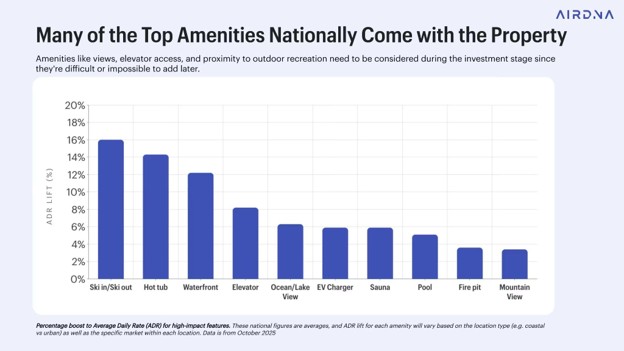
The pricing data backs the search data. AirDNA analysed thousands of listings and found properties offering an EV charger average 6.8% higher nightly rates, with the biggest lift in coastal and mountain markets, where more guests drive electric and public charging thins out. If that sounds like a description of UK holiday let country, it is. AirDNA also notes the amenity is still rare enough that having one gives a listing a real edge in platform filters.
In June 2026, 30% of every new car registered in the UK was fully electric, the highest monthly share on record for this year. Across the first half of 2026, battery electric cars took a quarter of the whole market. Add plug-in hybrids and more than four in ten new cars now arrive with a charging socket.
This isn't a curve that bends back. The ZEV mandate requires 33% of new car sales to be zero emission this year, rising to 80% by 2030. There are already more than 2.1 million fully electric cars on UK roads, plus over a million plug-in hybrids, and every one of those drivers takes holidays.
Here's the part that matters for rural and coastal hosts: the public charging network is heavily skewed towards cities. Of the UK's 121,171 public chargers, almost 40% sit in Greater London and the South East alone. An EV driver heading to a cottage in the Dales or a lodge on the Cornish coast knows the public network gets thin exactly where they're going. To an EV driver, a charger on your driveway is the difference between a relaxing week and planning the holiday around a supermarket car park.
So far, so obvious: install a charger, win the filtered searches. But there's a second decision hiding inside the first one, and plenty of hosts get it wrong. Who pays for the electricity?
Do nothing and the answer is you. Under the current Ofgem price cap, electricity on a default tariff averages 26.11pper kWh, and it moved up again this quarter. A modern EV battery holds 60 to 80kWh, so one full charge costs £16 to £21 at your meter. A guest who arrives low and tops up twice during a week's stay can put 100 to 150 kWh on your bill. That's £26 to £39 for a single booking, and it climbs every year as more of your guests arrive electric. For context, Ofgem's typical household uses 2,500 kWh in an entire year. Run enough EV stays through a season and free charging starts to look like a second utility bill.
Free charging also invites exactly the behaviour you'd expect. When electricity costs the guest nothing, some will arrive at 10% and leave at 100%, every visit.
The fix is not a flat fee guessed at checkout, and it's not quietly padding the nightly rate for every guest whether they drive electric or not. The fair version, for both sides, is per-kWh billing: the guest pays for exactly the energy they used, read from the charger's own meter, and nothing else.
That's the model GuestCharge was built for. Guests scan a QR code on the charger and pay by card, Apple Pay or GooglePay. No app to download, no account to create. The charger meters the session, the guest sees a transparent per-kWh rate before they plug in, and the money settles straight to the host. There's no subscription; GuestCharge takes a flat per-charge platform fee. It works over “OCPP”, the open EV charging standard, so it sits on top of more than 80 charger brands hosts already own rather than forcing new hardware.
For guests, it's still a bargain. On the public network, the average pay-as-you-go price in June 2026 was 79p per kWh at rapid and ultra-rapid chargers, and 54p even at slower public chargers. Paying a host's fair rate on a driveway, overnight, while they sleep, beats both the price and the experience.
The below are, of course, illustrative numbers with assumptions stated. Make sure to adjust for your own property!
Say your property takes 15 EV bookings this year and each draws 100 kWh over the stay. Given free of charge, that's1,500 kWh at 26.11p, or about £390 absorbed into your costs. Billed at a transparent, and still cheaper than public charging, 60p per kWh, the same usage returns roughly £900: electricity covered, a small margin on top, and no awkward conversations.
The bigger number is the booking effect. AirDNA's analysis found the EV charger amenity correlates with around 6.8%higher nightly rates. On a property turning over £20,000 a year, that correlation is worth roughly £1,360. Adding to that the £900 of recovered electricity and you have increased your property’s annual revenue by £2,260, or an 11% revenue increase per property.
Correlation isn't a promise, and your market matters, but set against a one-time installation cost of £800 to £1,200for a standard 7kW unit, the payback case doesn't need optimistic assumptions to work.
And on the install cost, the Workplace Charging Scheme covers small accommodation businesses, OZEV's category for hotels, B&Bs, holiday and short-stay accommodation and campsites with fewer than 250 staff, at 75% of purchase and installation costs up to £500 per socket. You'll need to show you're trading as a business (a Companies House number, VAT registration or a non-domestic rates bill all count), and the scheme runs until 31 March 2027, which OZEV has confirmed is its final year.
If you've been waiting for a nudge, this is the last one the government is planning to give you.
Join the 141 listings who have already added an EV Charger amenity this week; from your Calendar page, click the listing, then "Amenities", and just select the "EV Charger" amenity under the "Popular Amenities" section. You'll see a pop up that will take you direct to GuestCharge! Easy.
If you already have a charger, GuestCharge connects to it and you can be billing guests this week: sign up here, connect your charger, set your price, and you're done. Guests scan, pay and charge, and your earnings settle straight to you.
If you don't have a charger yet, the maths above is your business case, and the grant window is your deadline.

.png)