.svg)
Solutions
Features
Resources
.svg)
Trusted by 2,000+ operators
"Whether you have a smaller listing count or a larger one, Uplisting is easy to use, and it's scalable."
Josh Kristoff
Nomad Capital Adventures

4.8/5

4.9/5
Log in to your account
"Whether you have a smaller listing count or a larger one, Uplisting is easy to use, and it's scalable."
Josh Kristoff
Nomad Capital Adventures
Log in to your account

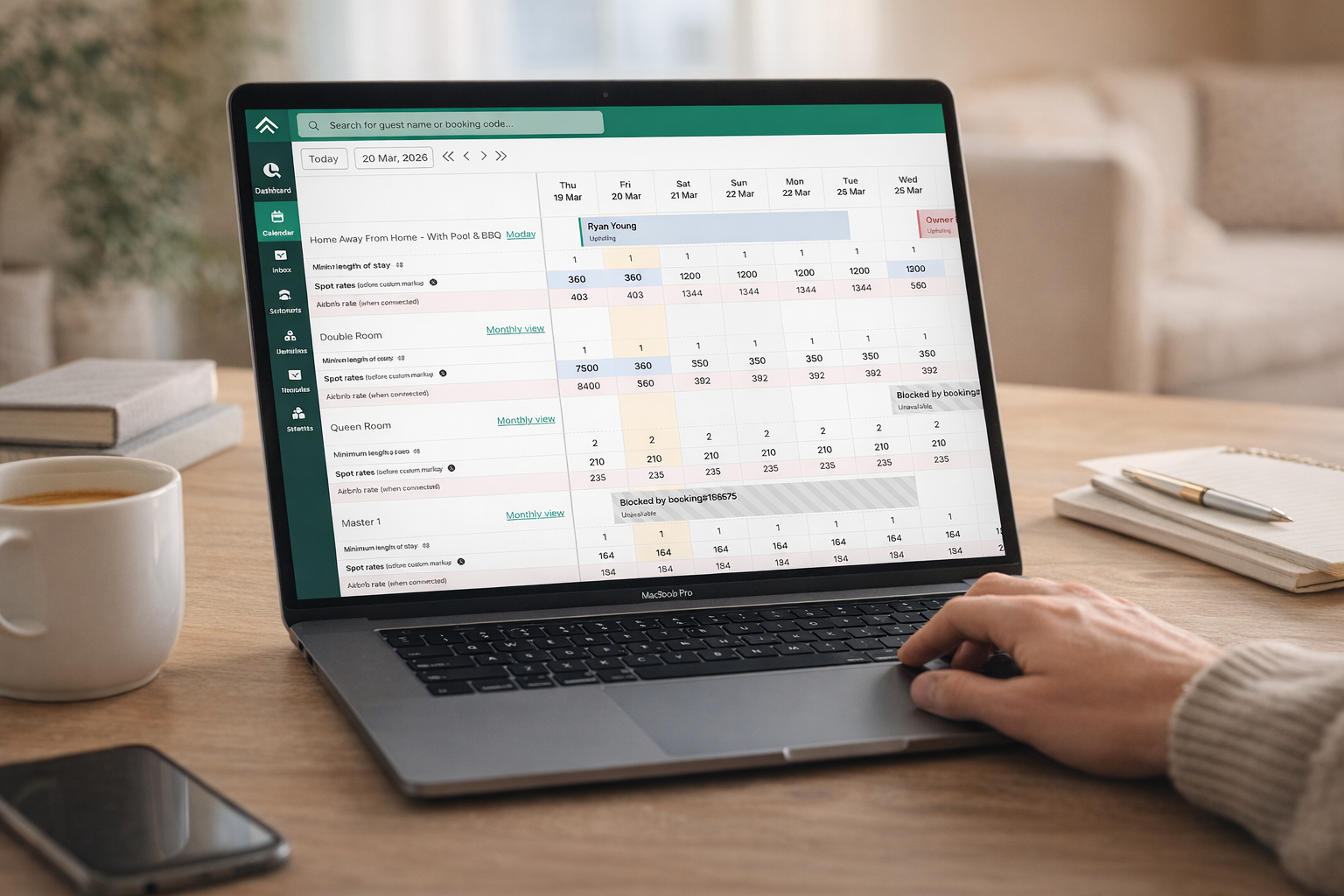
Even well-performing Airbnb listings have gaps. A slow midweek stretch, an empty week between longer stays, a last-minute cancellation that leaves a night unbooked. These are realities every host faces, regardless of how strong their reviews or how competitive their base price.
The difference between hosts who let those gaps sit and hosts who systematically fill them often comes down to one thing: a smart discounting strategy.
Discounting on Airbnb isn't about lowering your prices permanently or racing to the bottom. It's about applying targeted, time-based incentives that encourage the right bookings at the right moments. Used correctly, discount strategies can increase your occupancy, reduce costly turnover, and make your revenue far more predictable.
In this guide, we'll walk through the most effective Airbnb discount strategies used by professional hosts: length of stay discounts, non-refundable pricing, and last-minute rate rules. We'll show you exactly how to set them up and automate them using Uplisting.

A length of stay (LOS) discount rewards guests for booking longer. When a guest commits to a week or a month, you offer a reduced nightly rate in exchange for the extended stay. Airbnb supports both weekly and monthly discount settings natively, and tools like Uplisting let you configure and automate these across all your connected channels.
Longer bookings are almost always more profitable than a series of shorter ones when you account for the full picture:
- Higher occupancy: fewer gaps between check-ins and check-outs
- Lower turnover costs: fewer cleans, fewer restocks, fewer hours spent on logistics
- More predictable revenue: a 10-night booking is locked in; five 2-night bookings carry more cancellation risk and uncertainty
For hosts managing multiple properties, these savings compound quickly.
A common and effective structure looks like this:
- 5–15% discount for stays of 7 nights or more
- 15–30% discount for stays of 28 nights or more depending
The right percentages will depend on your market, your typical booking window, and your operating costs. A property in a high-demand city centre may only need a modest weekly discount to attract longer stays. A rural or seasonal listing might need a more compelling monthly offer to compete.
Within Uplisting's pricing settings, you can configure weekly and monthly discounts at the property level. Once set, Uplisting automatically syncs these discounts to your connected OTAs, including Airbnb, so there's no need to update each channel manually.
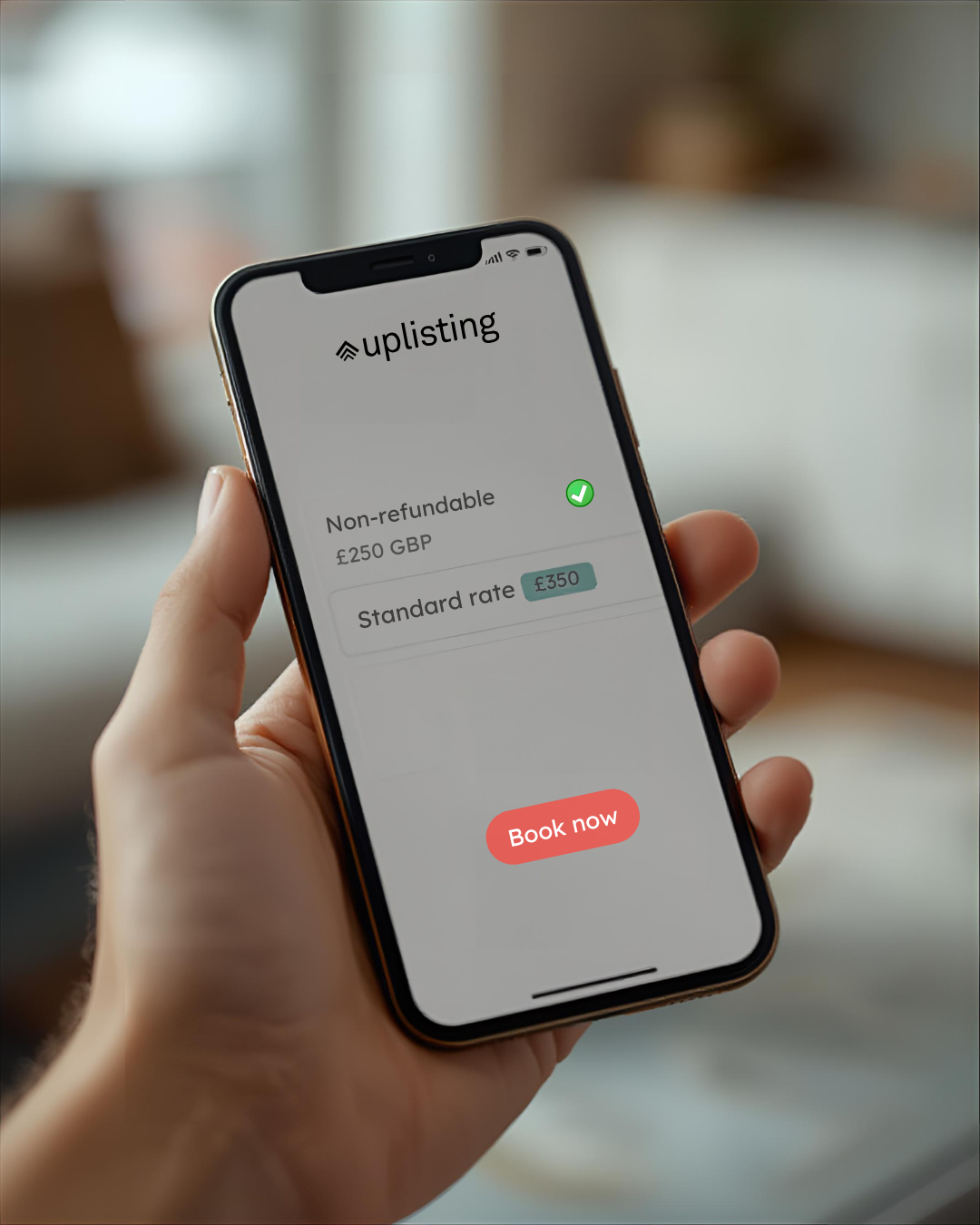
A non-refundable discount offers guests a lower nightly rate in exchange for committing to a non-refundable booking. The guest gets a better price; you get certainty that the booking won't disappear at the last minute.
Cancellations are one of the most disruptive and costly things that can happen to a short-term rental. A late cancellation leaves you scrambling to fill a gap, often at a discounted last-minute rate anyway, and sometimes you don't fill it at all.
Non-refundable pricing directly addresses this:
- Reduces cancellation risk: guests who pay a non-refundable rate are far less likely to cancel
- Improves revenue certainty: you can plan cash flow and operations with more confidence
- Encourages earlier bookings: guests looking for a deal are incentivised to book and commit sooner
Most hosts offer a 5–12% discount for non-refundable bookings with Airbnb following a ~10% typical discount. The right figure depends on how often you experience cancellations, how easily you can rebook at short notice, and what your market will support. If cancellations are a recurring problem, the certainty of a non-refundable booking may be worth offering a more attractive discount.
Uplisting allows you to configure non-refundable pricing options within your pricing settings. These sync automatically with Airbnb's cancellation policy framework, so guests see both options clearly at the time of booking.

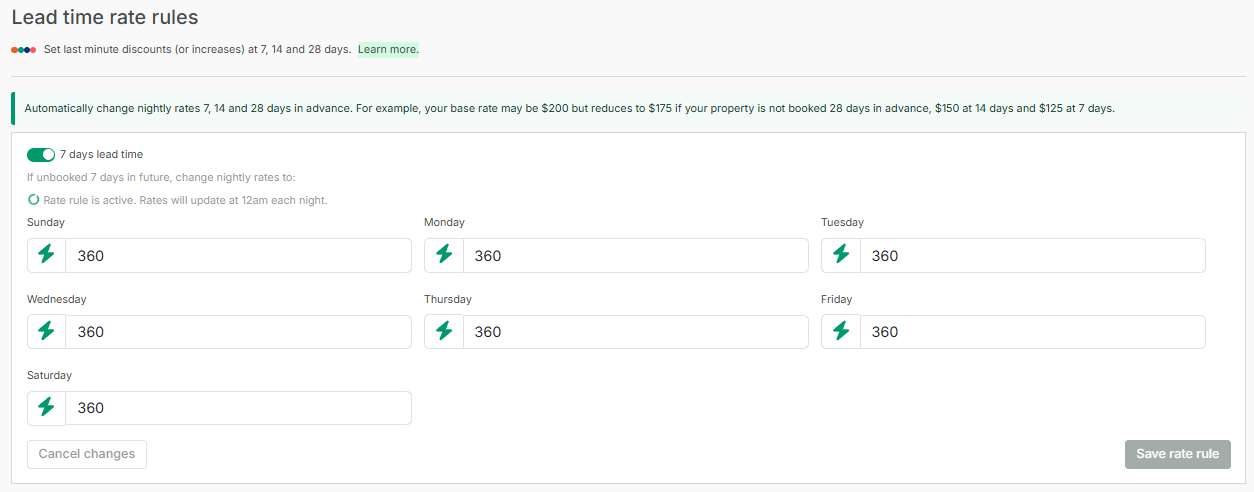
Last-minute discounts (sometimes called lead time rate rules) reduce your nightly rate as the arrival date approaches and nights remain unbooked. The closer to check-in, the steeper the discount. This creates a dynamic pricing mechanism that increases your chances of filling nights that would otherwise go empty.
An empty night generates zero revenue. A discounted booking almost always generates more than nothing, and it avoids the sunk cost of a vacant property.
Last-minute travellers are a real and growing segment: people booking weekend trips on Tuesday, business travellers with sudden itinerary changes, or spontaneous getaways. These guests are often price-sensitive and specifically searching for deals. A well-timed last-minute discount puts your listing in front of them at exactly the right moment. Remember that on Airbnb, for discounts of 10% or more off your 60-day median price, guests will see a callout on your listing page and in search results including the crossed-out pricing before discounts. A useful urgency creator.
A tiered approach tends to work well.
Days Before Check-In & Discount Applied:
7 days at 10%
3 days at 15%
1 day at 20%
You can adjust these thresholds and percentages based on your typical booking patterns. If most of your bookings come in 2–4 weeks out, you might set your first trigger at 14 days. If you rarely get bookings more than a week in advance, you might focus your rules on the final 3–5 days.
In Uplisting, these are configured as Lead Time Rate Rules. You define the time threshold and the discount percentage, and Uplisting automatically adjusts your pricing as the check-in date approaches, across all connected channels, without any manual intervention.
This is where automation becomes genuinely valuable. Manually updating prices across multiple listings and multiple channels in the days leading up to check-in is time-consuming and error-prone. Uplisting handles it in the background, so your pricing stays competitive even when you're not actively managing it.
The most effective Airbnb hosts don't rely on a single discount strategy in isolation. They layer them together to cover different scenarios.
Here's how a combined approach might work in practice:
- Length of stay discounts attract guests who can commit to longer bookings, filling large calendar blocks and reducing turnover
- Non-refundable options convert price-sensitive guests into committed bookings, reducing the risk of late cancellations that create gaps
- Lead time rate rules act as a safety net, automatically adjusting prices in the final days before check-in to fill any remaining unbooked nights
Each strategy targets a different type of booking behaviour. Together, they cover the full booking window, from guests planning months ahead to those searching the day before arrival.
The result is an occupancy profile that's higher, more consistent, and less dependent on luck or constant manual intervention.
Before you start configuring discount rules, a few principles worth keeping in mind:
Avoid blanket, permanent discounts. If your base price is always discounted, guests stop perceiving it as a deal, and you've simply lowered your revenue without the strategic benefit. Discounts should feel like incentives, not your standard rate.
Be targeted. Apply discounts to specific scenarios (long stays, last-minute nights, non-refundable bookings) rather than across the board. This preserves your standard rate while still capturing price-sensitive demand.
Review your performance regularly. Look at your occupancy rate, average daily rate, and booking lead times each month. If you're consistently filling 90%+ of nights, you may not need aggressive last-minute discounts. If you have recurring gaps, your current strategy may need adjusting.
Think seasonally. High-season demand may mean you can pull back on discounts entirely. Low season or shoulder periods may require more aggressive incentives to maintain occupancy. Build seasonal adjustments into your rate rules rather than setting them once and forgetting them.
Let automation do the heavy lifting. The more you can automate your pricing rules, the more consistently they'll be applied, and the less time you'll spend on manual updates. Tools like Uplisting are built specifically for this.
Discounting on Airbnb isn't a sign of a struggling listing. It's a professional revenue management technique, and the hosts who use it well consistently outperform those who set a fixed price and hope for the best.
The strategies in this guide (length of stay discounts, non-refundable pricing, and lead time rate rules) are proven approaches used by property managers overseeing dozens of listings. They're not complicated, but they do require consistency and the right tools to execute well at scale.
Uplisting makes it straightforward to configure, automate, and sync these strategies across your Airbnb listings and other connected channels. Whether you're managing two properties or twenty, having your pricing rules run in the background means fewer empty nights and more time spent on the things that actually grow your business.
Uplisting makes it easy to set up discount rules, automate pricing adjustments, and manage listings across multiple booking channels, all from one place.
Start your free trial and put your Airbnb pricing on autopilot

.png)